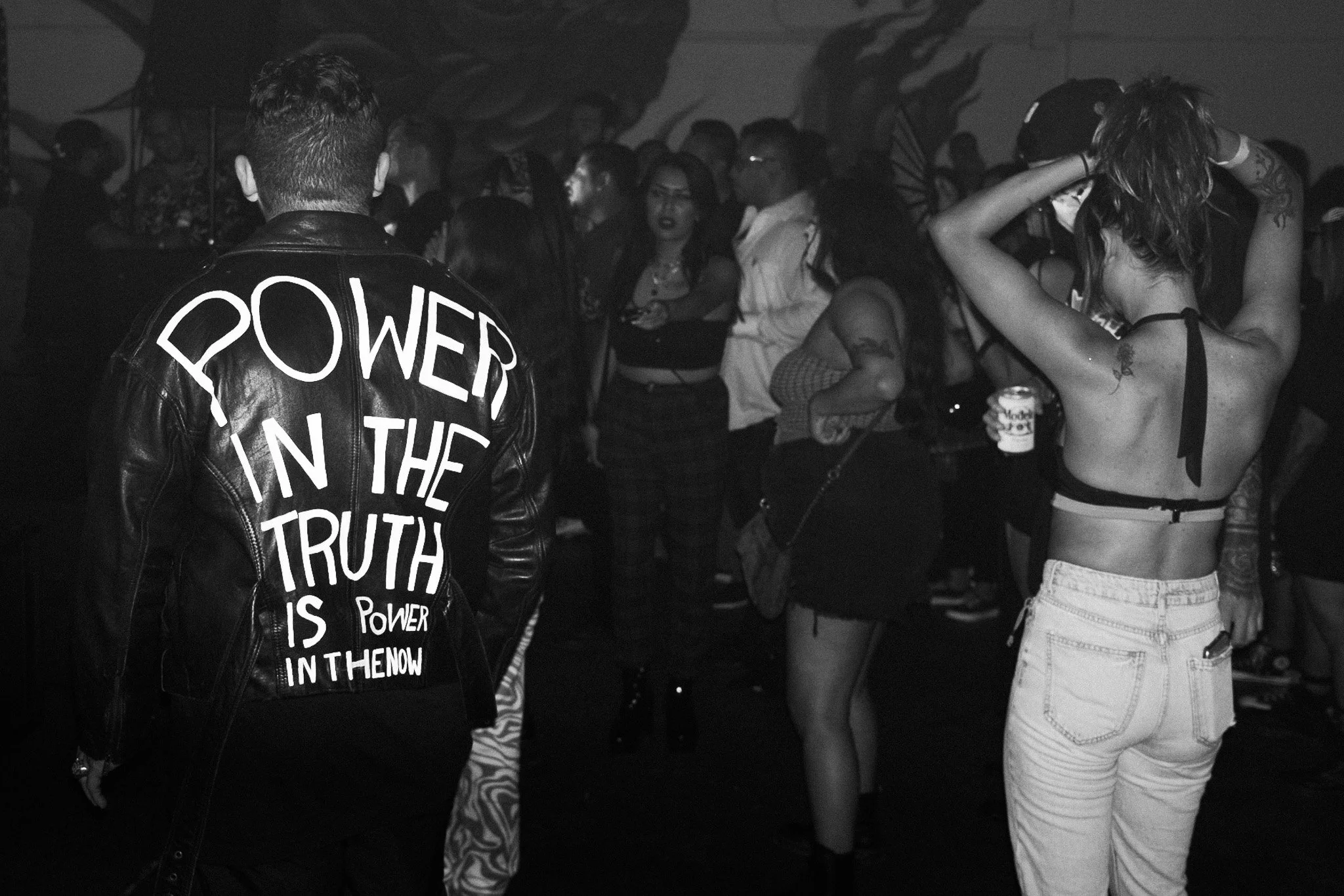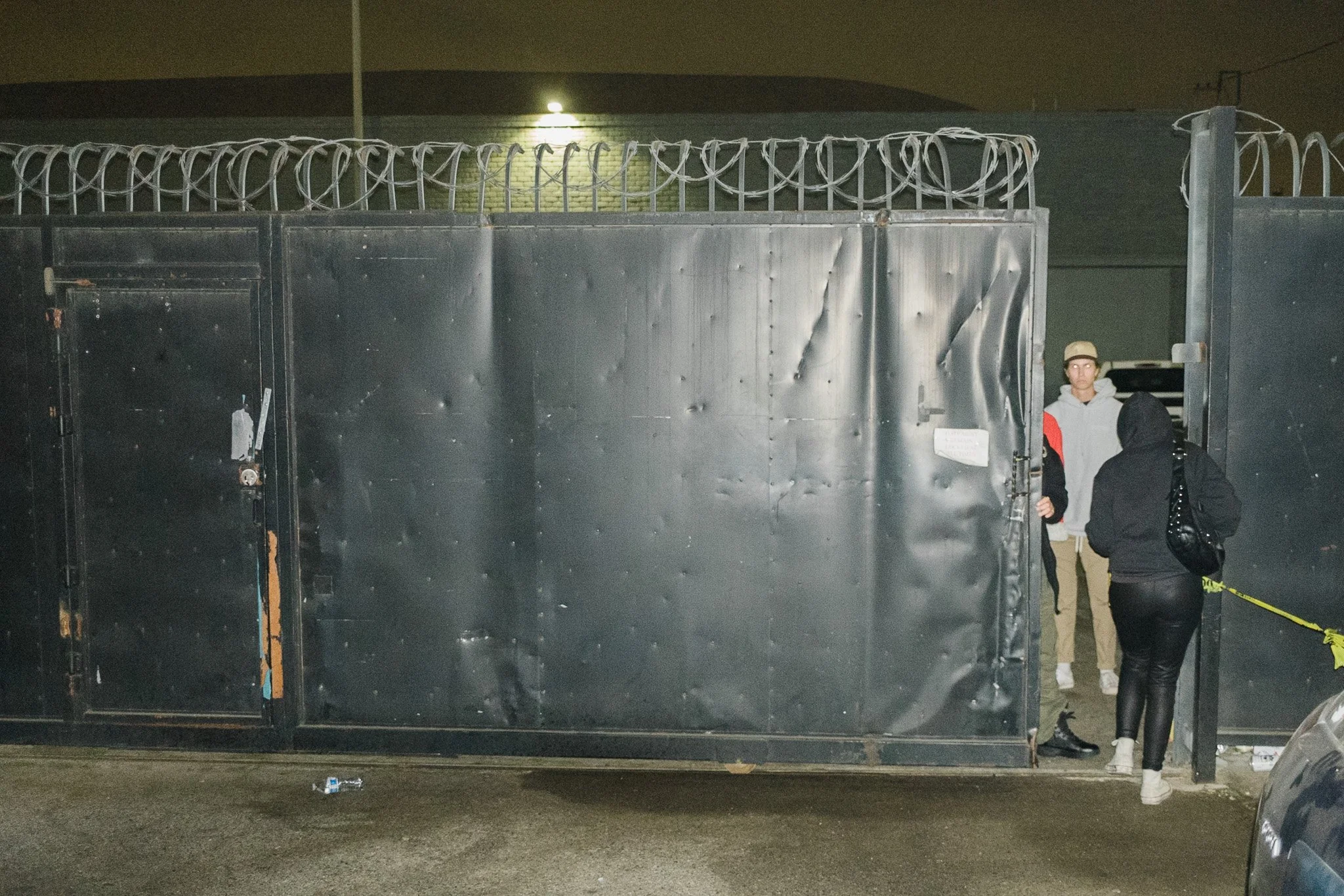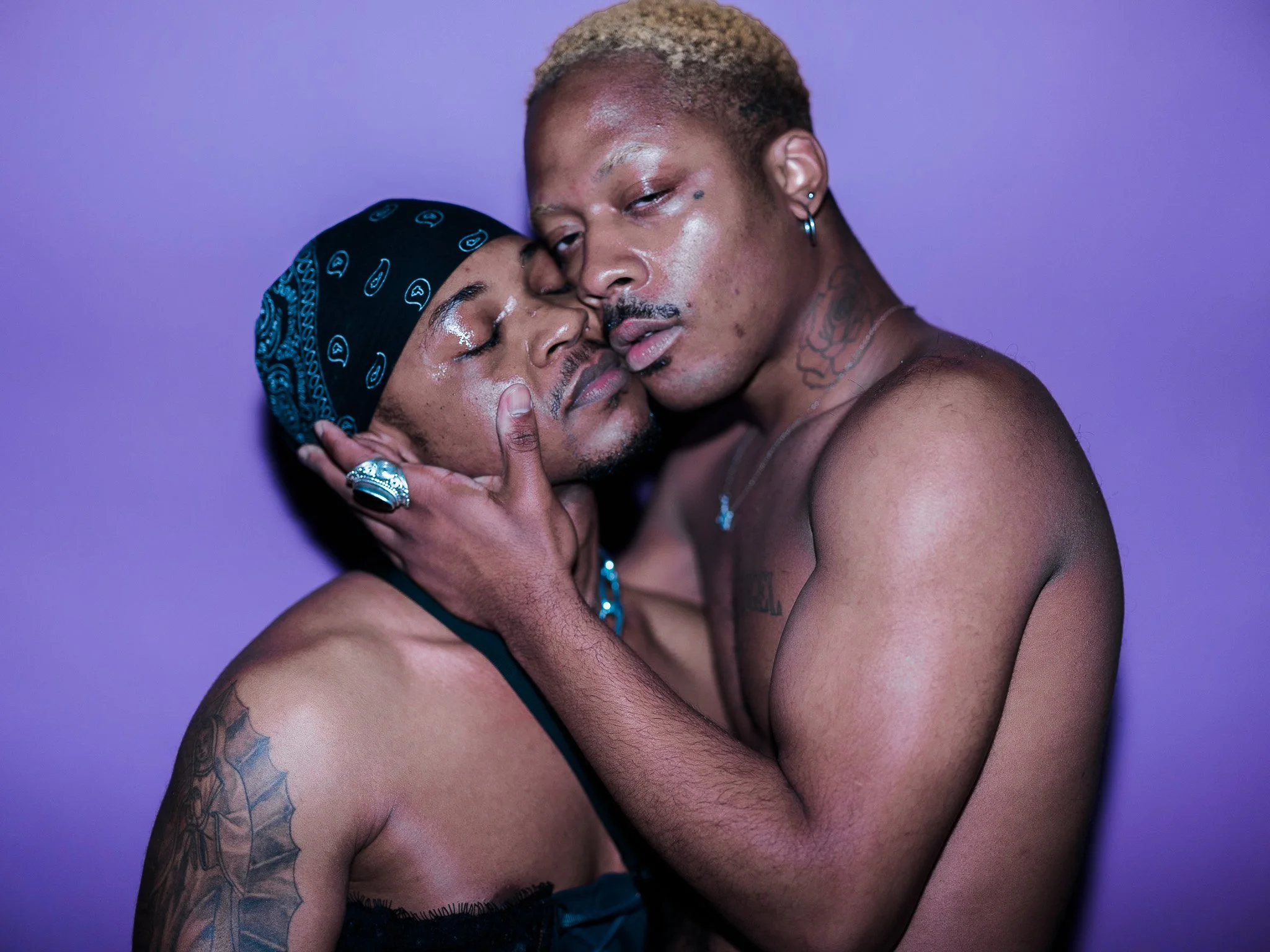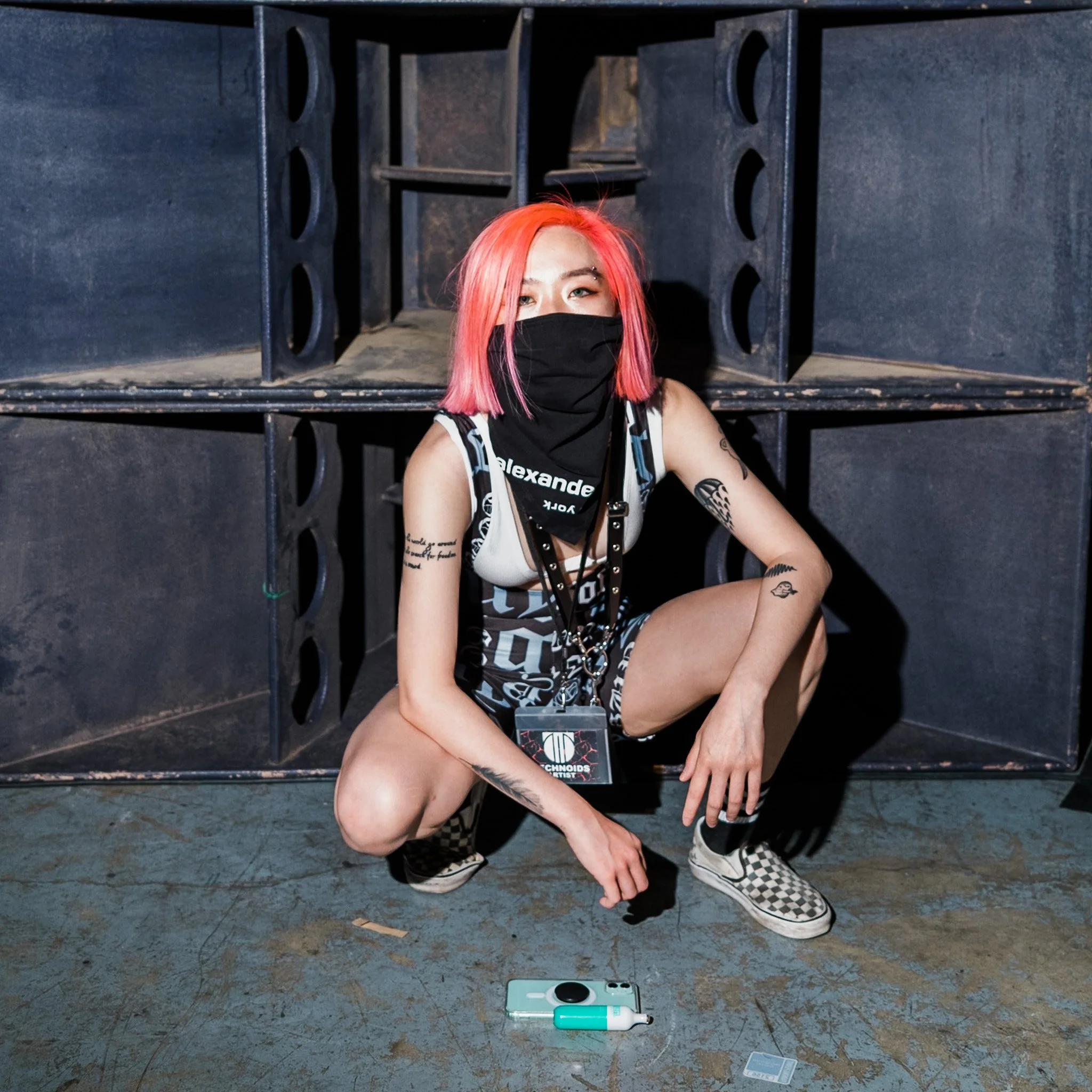
In 2021, I spent time with hardcore techno ravers in Los Angeles during California’s second lockdown. I was curious to understand how and why people were flouting health and safety regulation for the sake of partying in tightly enclosed spaces until the break of dawn.
What I discovered in my interviews with organizers and party-goers was that the beat simply could not and would not stop for anything. There was community strength in showing up for each other and the music. Creativity and debauchery were needed more than ever.
I asked what people thought of the virus and the health impacts. Many were willing to risk themselves as an act of resistance against the state. Others believed the conspiracy theories of the time about the origins of the virus, and that it was a form of social control.
I also learned about the planning and logistics of putting on a party, from the scene-developed reservation system, to the negotiations with venues (warehouses of course, but also auto shops). What I took away was that the spirit of the party and the people who attended them was an act of resistance like so many others. This was a queer space, a space build upon the musical traditions and people who invented and carried on the spirit of house and techno, and one that could not simply disappear because of health and safety.
There were masks and vaccination card checks, but they were loosely enforced and, given the density and proximity of dancing bodies, measures to protect people from each other seemed to be strictly performative. When the cops arrived, it was never to sanction revelers for ignoring quarantine dicta, but rather to shut down parties on noise complaints while detectives raided the till.
This work was informed by my training in cultural anthropology and social analysis, and has guided my interest in underground music cultures ever since.